


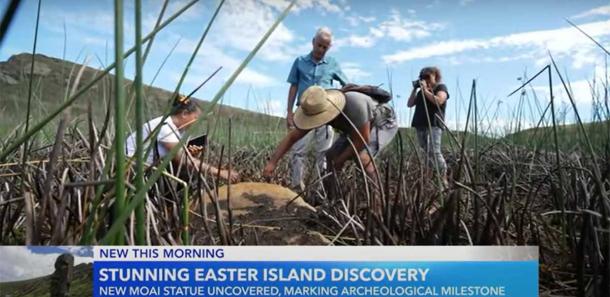
Researchers inspect the new-found Moai in the dry lake bed on Rapa Nui. (GMA/ YouTube Screenshot )
New Moai Smaller Than Most: Hiding in Plain Sight
The new Moai is smaller than most of the other sacred monuments found on Easter Island - statues that are important markers of Rapa Nui culture and heritage. The Rapa Nui people carved almost 1,000 Moai statues from tuff, a volcanic rock, between the 13th and 16th centuries. The statues are believed to represent ancestors or important leaders of the community and are arranged in a ring around the island, facing inwards.
The moai are important because they really represent the history of the Rapa Nui people,” Terry Hunt, professor of archaeology at the University of Arizona, told ABC. “They were the islanders’ deified ancestors. They’re iconic worldwide, and they really represent the fantastic archaeological heritage of this island.
The discovery of the new Moai statue has excited researchers, as it is smaller than most others on the island, and had been hidden by tall reeds in the dry lake bed. Archaeologists believe that there may be more statues to uncover, and are looking for evidence of other Moai as well as the tools that might have been used to make them. The discovery of new Moai statues could provide insight into the culture and traditions of the Rapa Nui people.
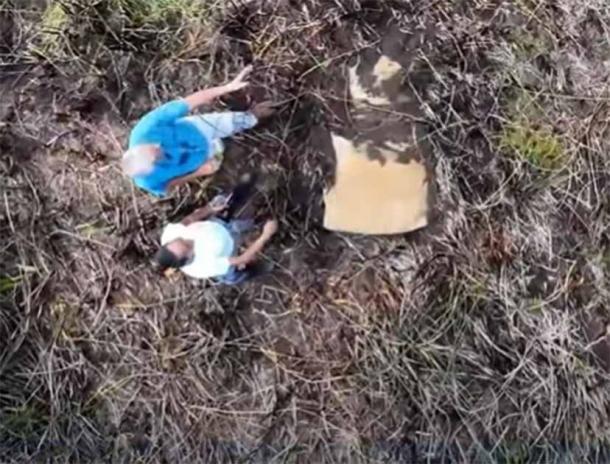
New Moai seems to be lying on the lake bed, and smaller than the existing finds. (GMA/ YouTube Screenshot)
They’ve been hidden by the tall reeds that grow in the lake bed, and prospecting with something that can detect what’s under the ground surface may tell us that there are in fact more moai in the lakebed sediments,” Hunt added. “When there’s one moai in the lake, there’s probably more.


Comments
Post a Comment